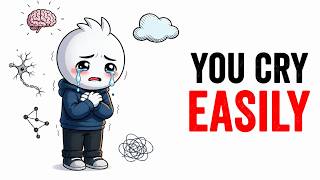
The Hidden Psychology of People Who Cry Easily
リアクション
2026年07月17日
#HSP #Empath #psychology
"Do you cry easily? During arguments, sad movies, or moments when you're not even that upset — and the tears come anyway, before you've decided to feel anything?
You've probably spent years calling it weakness. You've been told you're too sensitive. You've felt small when your voice cracked and people stopped taking you seriously.
But what if your tears were never the flaw you were taught they were?
This video breaks down the hidden psychology of people who cry easily — not as fragility, but as a specific mechanism running quietly inside your nervous system. Why you cry when you're angry. Why you feel other people's pain as if it were your own. And why the thing you were mocked for might be the rarest thing about you.
If your tears have ever betrayed you at the worst possible moment — this one's for you.
⚠️ Disclaimer: This channel is for educational and informational purposes only. It is not intended to replace professional
📚 References:
Sensory Processing Sensitivity: Dr. Elaine Aron's research on the Highly Sensitive Person (HSP), estimating the trait in roughly 15–20% of the population.
Neuroscience: Bianca Acevedo's fMRI studies on heightened activation in the insula and mirror neuron system among highly sensitive individuals.
Behavioral Psychology: Emotional rumination and prolonged emotional processing (Susan Nolen-Hoeksema).
Biochemistry of Tears: Dr. William Frey's research suggesting emotional tears carry elevated stress hormones, including cortisol and ACTH.
Affective Neuroscience: Amygdala flooding and the ""emotional hijack"" concept (Daniel Goleman) explaining tears during anger.
Emotional Regulation: American Psychological Association (APA) frameworks on empathy, sensitivity, and healthy emotional release."
#psychology #emotionalintelligence #cryingpsychology #HSP #Empath #highlysensitiveperson #selfawareness #personalgrowth #emotionalregulation
"Do you cry easily? During arguments, sad movies, or moments when you're not even that upset — and the tears come anyway, before you've decided to feel anything?
You've probably spent years calling it weakness. You've been told you're too sensitive. You've felt small when your voice cracked and people stopped taking you seriously.
But what if your tears were never the flaw you were taught they were?
This video breaks down the hidden psychology of people who cry easily — not as fragility, but as a specific mechanism running quietly inside your nervous system. Why you cry when you're angry. Why you feel other people's pain as if it were your own. And why the thing you were mocked for might be the rarest thing about you.
If your tears have ever betrayed you at the worst possible moment — this one's for you.
⚠️ Disclaimer: This channel is for educational and informational purposes only. It is not intended to replace professional
📚 References:
Sensory Processing Sensitivity: Dr. Elaine Aron's research on the Highly Sensitive Person (HSP), estimating the trait in roughly 15–20% of the population.
Neuroscience: Bianca Acevedo's fMRI studies on heightened activation in the insula and mirror neuron system among highly sensitive individuals.
Behavioral Psychology: Emotional rumination and prolonged emotional processing (Susan Nolen-Hoeksema).
Biochemistry of Tears: Dr. William Frey's research suggesting emotional tears carry elevated stress hormones, including cortisol and ACTH.
Affective Neuroscience: Amygdala flooding and the ""emotional hijack"" concept (Daniel Goleman) explaining tears during anger.
Emotional Regulation: American Psychological Association (APA) frameworks on empathy, sensitivity, and healthy emotional release."
#psychology #emotionalintelligence #cryingpsychology #HSP #Empath #highlysensitiveperson #selfawareness #personalgrowth #emotionalregulation